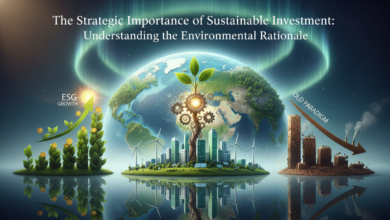
ESG Integration: Transitioning from a Temporary Trend to a Permanent Corporate Standard

The Evolution of ESG in the Global Marketplace
For several years, Environmental, Social, and Governance (ESG) criteria were often categorized as a passing trend within the corporate world. However, recent global shifts in regulation, investor sentiment, and consumer behavior have demonstrated that ESG is no longer a peripheral concern. It has become a foundational element of modern business strategy and a critical metric for long-term financial viability.
[IMAGE_PROMPT: A wide-angle, photorealistic shot of a modern glass skyscraper integrated with vertical gardens and solar panels, set against a clean city skyline at sunrise.]

Regulatory Mandates and Standardization
One of the primary reasons ESG has moved beyond trend status is the rapid advancement of international regulations. Bodies such as the International Sustainability Standards Board (ISSB) are working toward global baseline standards for sustainability-related financial disclosures. In many jurisdictions, reporting on carbon footprints and board diversity is no longer voluntary; it is a legal requirement. This shift forces companies to integrate governance and environmental responsibility into their core operational frameworks rather than treating them as separate corporate social responsibility initiatives.
The Shift in Investor Priorities
Institutional investors and asset managers are increasingly viewing ESG performance as a proxy for competent management. By analyzing how a firm manages its social impacts and environmental risks, investors can better predict potential liabilities and long-term resilience. Consequently, capital is being reallocated toward companies that demonstrate transparent and ethical governance practices.
[IMAGE_PROMPT: A professional, photorealistic close-up of a diverse group of executives in a minimalist boardroom, discussing data displayed on high-tech transparent screens showing green energy growth and social impact metrics.]
Strategic Social Responsibility
Beyond the environmental and governance pillars, the social aspect of ESG focuses on how companies manage relationships with employees, suppliers, and the communities in which they operate. Ensuring fair wages, workplace safety, and diversity is not just an ethical choice but a strategic one. Companies that prioritize social factors often see higher employee retention and stronger brand loyalty among consumers.
Conclusion: The Future of Business is Sustainable
In conclusion, viewing ESG as a mere trend is a fundamental misunderstanding of the current economic landscape. It is a structural shift in how value is created and measured. Organizations that fail to internalize these principles risk obsolescence, while those that embrace them as a permanent standard are better positioned to navigate the complexities of the 21st-century economy.